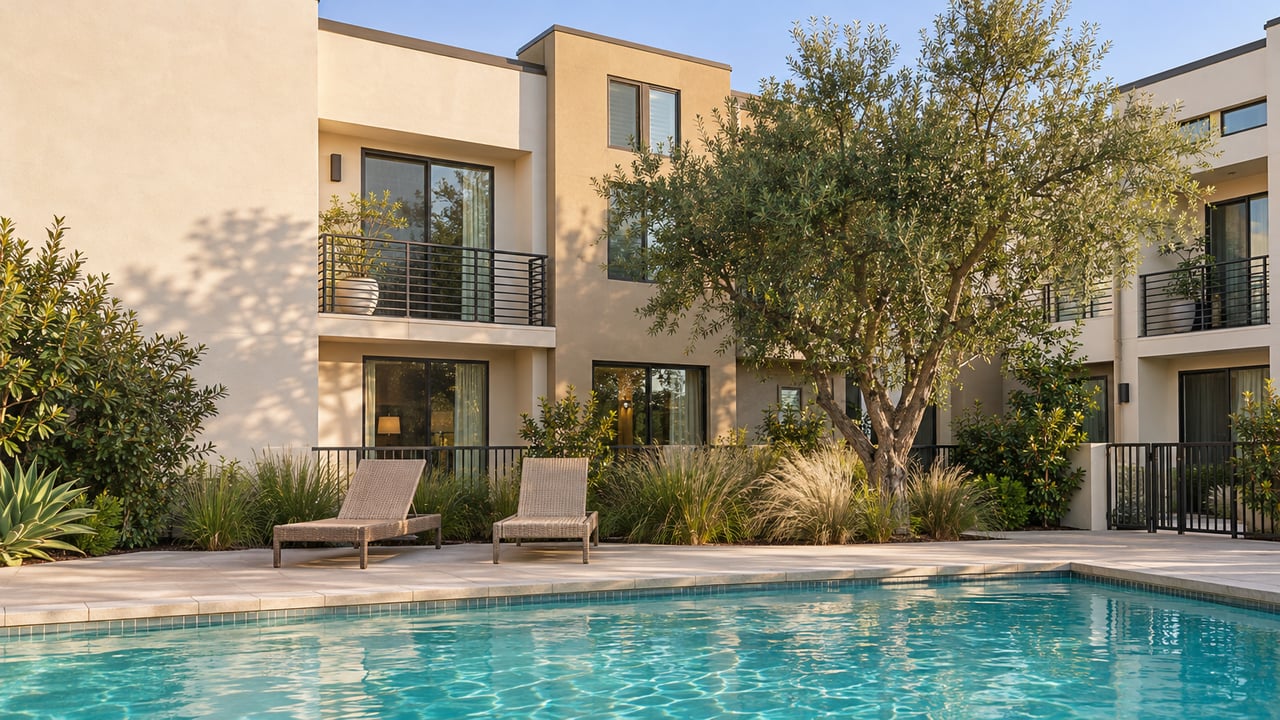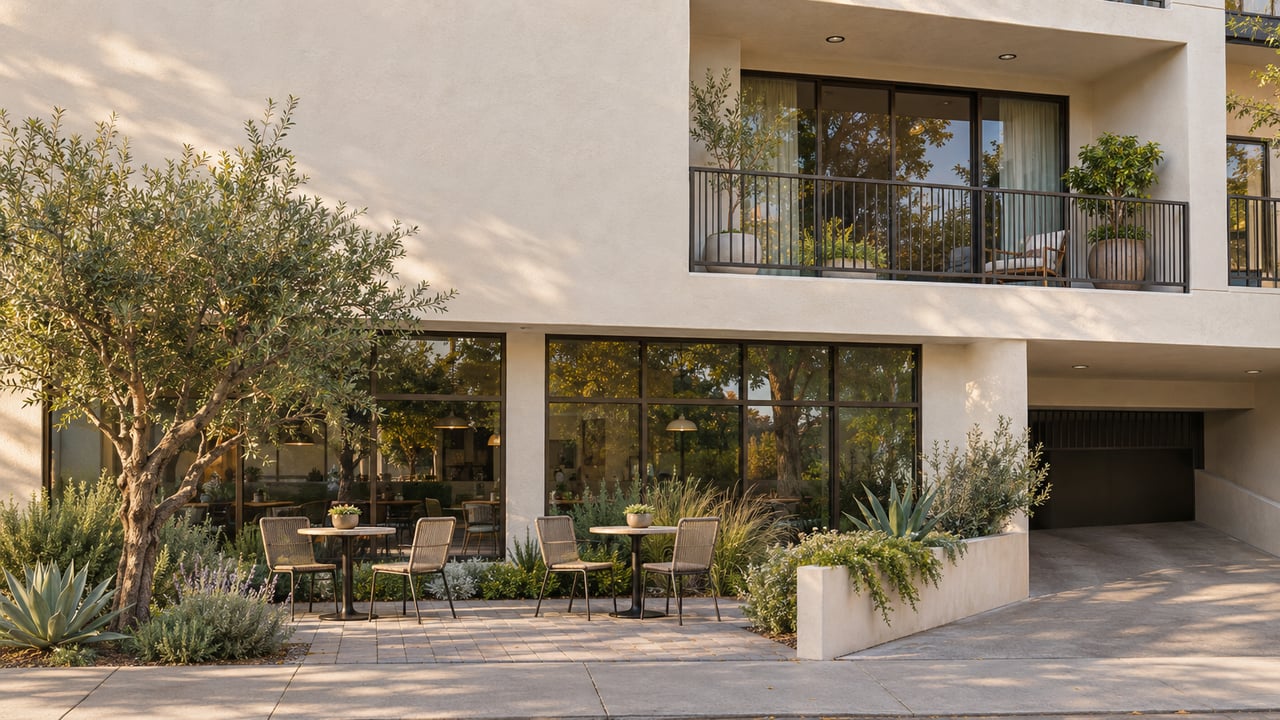
The City of Redondo Beach made one illustration to explain Measure ART. It shows a fictional three-story building on a 19,500-square-foot lot of the kind common along Artesia Boulevard. The building totals 29,000 square feet, which fits under the measure's new floor area ratio of 1.5. The caption covers what sits underneath it, too: a three-level underground garage with 98 to 117 parking spaces. Easy Reader News published the rendering in October, and the whole measure is easiest to understand through that drawing.
Redondo Beach voters approved the measure on November 3. The measure sets out bigger building limits for the North Redondo commercial strip. Whether owners actually build depends on what it costs to dig that garage, so the corridor should be expected to change one lot at a time over several years.
What the vote changed on paper
As of the Los Angeles County Registrar's update on November 8, 2026, Measure ART had 18,290 yes votes, or 64.11%, and 10,238 no votes, or 35.89%. The measure needed a simple majority. The Daily Breeze reported that the post-election counts are semi-official and that the registrar has tentatively set certification for November 27.
The measure amends the city's General Plan and Zoning Ordinance. The Daily Breeze's pre-election rundown lists the main changes:
| Area | Before Measure ART | Under Measure ART |
|---|---|---|
| Artesia and Aviation boulevards, floor area ratio | 0.6 | 1.5 |
| Artesia and Aviation, building height | 30 feet, two stories | 45 feet, three stories |
| Pacific Coast Highway, floor area ratio | 0.5 | 1.0 |
| Industrial areas north of Manhattan Beach Boulevard | 0.7 | 1.0 |
| Some residential and mixed-use densities | 35 or 28 units per acre | 30 units per acre |
The measure also creates a mixed-use transit center zone and an industrial flex overlay. The overlay allows uses such as research and development, incubator space, offices and hotels. It rezones some properties along Pacific Coast Highway from mixed-use or residential to commercial. Any change that touches the city's coastal zone also needs approval from the California Coastal Commission before it takes effect. Community Development Director Marc Wiener told Easy Reader that the residential and mixed-use adjustments are "minor changes," and that "most properties are not affected."
The rest of this post sticks to the Artesia and Aviation row, because that is where the city is trying to get something built.
Why nothing was getting rebuilt
A floor area ratio of 0.6 means a building can cover only 60% of its lot's area in total floor space. On the 19,500-square-foot lot in the city's example, that comes to about 11,700 square feet. At 1.5, the same lot can hold the 29,000-square-foot building in the rendering, nearly two and a half times as much.
District Four Councilmember Zein Obagi Jr. explained the old problem simply in Easy Reader's coverage:
"Giving a reason for a building to be reconstructed, or tear it down. Right now there is no reason; you can't build anything bigger than you have."
He also described the corridor as "probably the cheapest real estate in the beach cities" per square foot, and said the old rules had held the business strip back even as the residential areas around it became "nicer." Those two observations fit together. If an owner can only rebuild the same amount of space that's already standing, tearing down an existing building rarely pays, however much the surrounding blocks change.
Measure ART changes the limits. Whether rebuilding pays depends on the lot.
The garage under the drawing
Now look again at the bottom of the rendering. Adding 17,000 or so square feet means adding the parking that goes with it, and on the city's example lot that parking goes underground, three levels deep. The new rules also require setbacks where the corridor backs onto residential blocks.
The measure's official opponent made this point directly in the ballot argument against Measure ART: "zoning capacity is not economic development." The argument says the changes "do not guarantee feasible, approved, financed, or completed projects." It also notes that rooftop dining needs an Administrative Use Permit and counts toward a building's floor area. The opponent also stressed that the measure approves planning rules, not any particular project, and does not waive project review, environmental laws or coastal permitting.
Supporters and the opponent disagree about whether the measure was worth a vote. The measure changes planning rules, and each owner's construction and financing costs help determine whether rebuilding happens. Before the election, Easy Reader reported an opponent's filed rebuttal stating that no project exceeding the current limits had been proposed. Obagi told the paper he expected construction "as soon as June of next year, or winter of next year" if the measure passed. That makes 2027 the earliest point when his prediction could be tested.
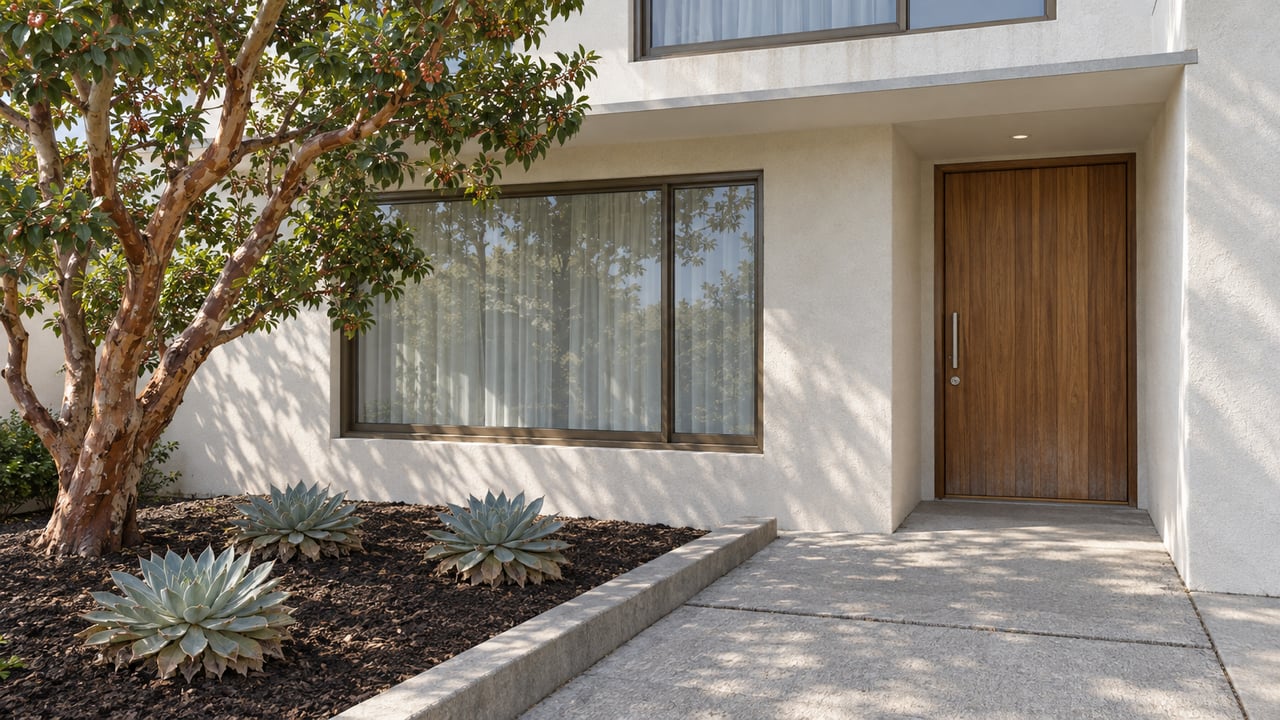
The city has also said what it wants the buildings to be like. Measure ART includes pedestrian-oriented design standards such as large front-facing windows. Wiener described the goal as "more of an opportunity to create a sense of place, where people would want to go, such as Riviera Village."
What is already changing in the existing buildings
While owners work through the cost of new construction, the corridor has been changing inside the buildings it already has, with new tenants filling existing spaces at both ends of the strip.
At the Aviation and Artesia corner, Juicy Dumpling Factory took over the former Denny's space at 1760 Aviation Blvd. Easy Reader reviewed it in January 2026. At the other end of the strip, Mickey's Deli opened its second location at Inglewood Avenue and Artesia Boulevard in a former Mobil convenience store. The space is 1,100 square feet with a 250-square-foot outdoor seating area, according to Easy Reader. Between them are long-running stops such as El Tarasco at 2622 Artesia Blvd. and the city's North Branch Library at 2000 Artesia Blvd.
The businesses already promote the corridor together. The summer 2026 Dine Around ARTesia brought in 19 Redondo businesses and more than 220 people for the first of two editions, Easy Reader reported. A Daily Breeze calendar listing gave South Bay Credit Union at 2023 Artesia Blvd. as the check-in point.
The city is also spending on the street. Under the ARTesia public art project, Redondo Beach hired LeBASSE Projects in May 2025 to plan public art for Artesia between Aviation Boulevard and Inglewood Avenue. City Council approved the Artesia Boulevard Strategic Art Plan on December 16, 2025. It calls for two monuments, a crosswalk, five concrete benches, two median installations and an LGBTQ+ sculpture. Phase I aims to have at least three installations in place by July 31, 2027.
The longer timelines around the corridor
Two larger projects nearby run on their own timelines, and both run longer than Measure ART's:
- November 27, 2026: tentative certification of the election results.
- July 31, 2027: the target for at least three ARTesia installations.
- 2026 to 2028: preliminary engineering and pre-construction work for Metro's K Line Extension to Torrance. The Metro Board approved the project on January 22, 2026, chose the Hawthorne alignment, and planned a station at South Bay Galleria.
- May 31, 2029: the end date of a $43.1 million design contract change, approved in May 2026, that moves the rail design from 15% to 30% complete.
- Late 2036: Metro's projected start of rail service, pending funding, according to the project FAQ.
South Bay Galleria Phase 2 at 1815 Hawthorne Blvd. is on the city's list of approved projects. It includes 15 townhomes, 335 apartments, 8,300 square feet of ground-floor commercial space and up to 845 parking spaces, and the Planning Commission approved it on August 21, 2025, per the city's current projects page.
What could change on North Redondo blocks
Under the old 0.6 ratio, owners had little reason to replace an existing building. Rebuilding decisions will depend on lot size, parking requirements and financing.
So the measure doesn't predict when a particular storefront will change. In the near term, the most visible changes on Artesia will be new tenants in existing buildings and the city's art installations.
Quick answers
Is Measure ART final? The semi-official count favors it, and the registrar has tentatively set certification for November 27, 2026.
Does the measure approve any specific building? No. It sets planning and zoning rules. Any project still goes through the city's regular review.
Does it apply to schools or the Civic Center? No. Public institutional zones, including school properties, the Redondo Beach Civic Center and the Beach Cities Health District, are excluded.
This post is general information about a zoning measure. It is not legal, tax or financial advice, so check how any rule affects a specific property with the city's planning staff or the right professional.
If you're weighing a North Redondo home near Artesia, or a ThreeSixty home a short drive up the road, and want to talk about the blocks you're considering, Matt Barry is happy to go through them with you. Get in Touch.